Technical Milestones: Inside the CAV Team
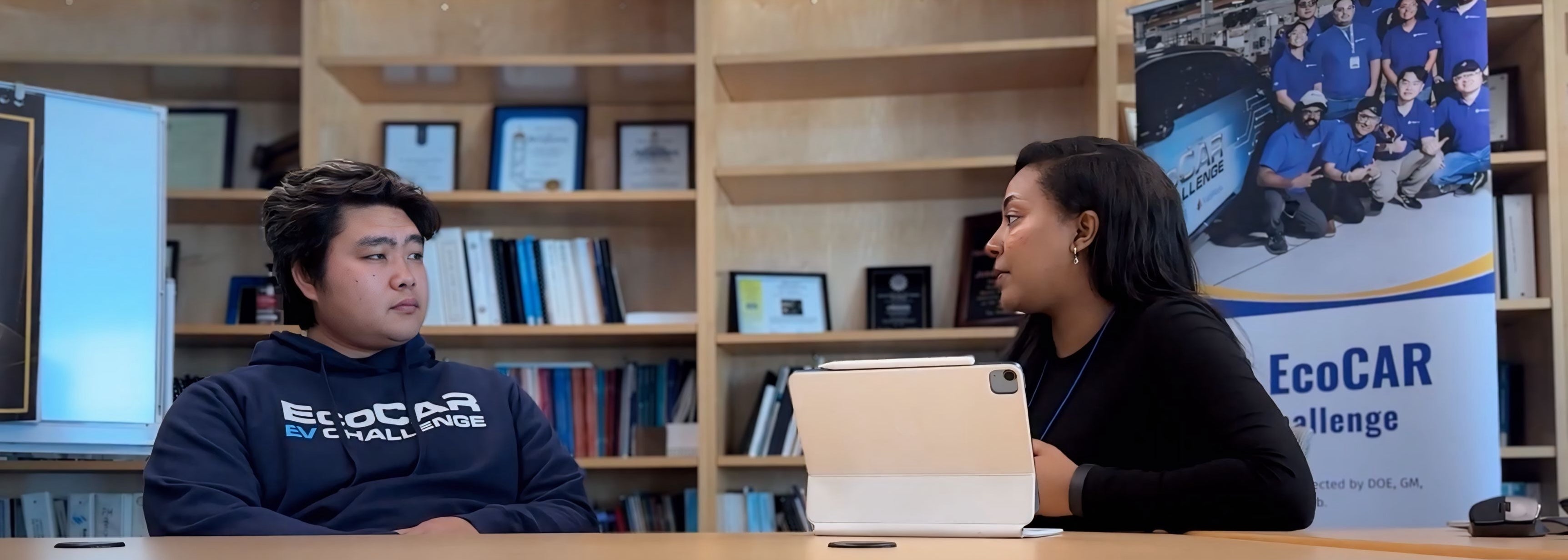
At the University of California, Riverside, innovation in connected and automated vehicle technology is being driven by student leaders like Edison Li, a second-year PhD student in Electrical Engineering and the Connected & Automated Vehicles (CAVs) Lead for EcoCAR.
Edison and his team are advancing Eco-Cooperative Adaptive Cruise Control (Eco-CACC). A technology that combines eco-driving techniques with platooning (automatic car-following) to improve traffic efficiency and fuel consumption. Edison's team has been using this to develop and test their system.
To develop and validate this technology, the team uses tools such as RTMaps and dSPACE, along with simulation environments. This way, they can conduct complete testing cycles of the Eco-CACC algorithm in a controlled virtual environment. This can help verify that the system behaves accurately under different driving scenarios before moving on to hardware and real vehicle testing.
When asked about his team, Edison explains how he is the CAV lead overseeing everything to be more efficient and minimize challenges. We also have leads working under Edison to manage individual teams well. The leads and individual team members will report and meet with Edison at least once a week to discuss progress.
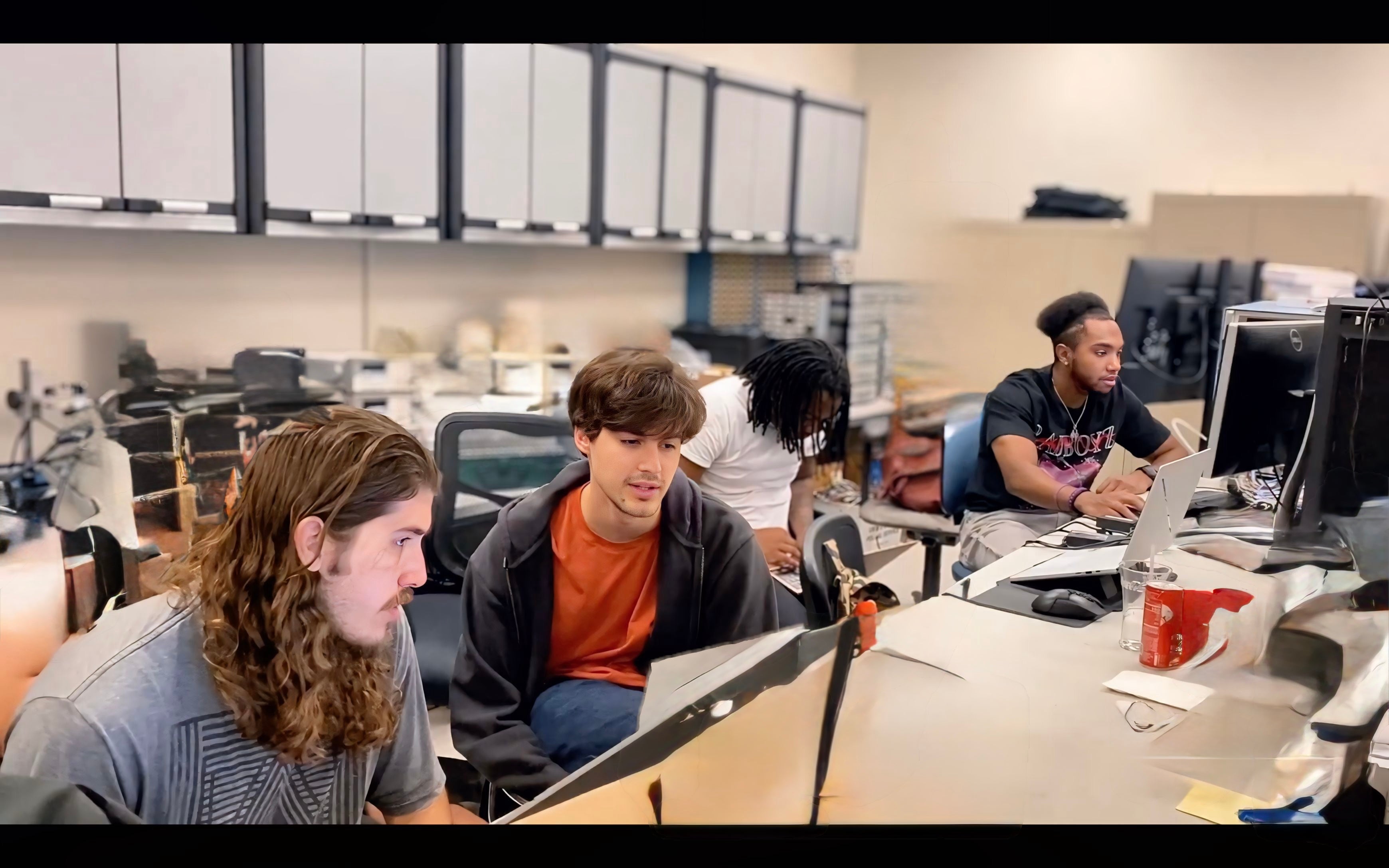
Beyond Eco-CACC, Edison has also been focusing on the Driver Monitoring System (DMS). The DMS is a technology that monitors a driver’s attention, alertness, and behavior to enhance safety and prevent accidents. Currently, the team is focusing on improving efficiency, such as reducing redundant warnings, while also providing situational awareness to the driver. Using tools like the Intel RealSense camera and dSPACE RTMaps, the team ensures real-time responsiveness throughout development.
To test whether the system is being accurately applied to real-world scenarios, Edison explains that “in general, our test plan is always to go through the software loop first and the hardware loop and move on to vehicle testing.” This process ensures there are no major risks and the whole vehicle testing environment is safe and controlled, as safety is our first priority.
Edison adds that they, “have been collecting data and processing the data offline; the goal is to deploy it onto the vehicle by the end of the month [April] ”. He says some of the next steps are vehicle testing, as we are finalizing testing some features. Most of them have passed “seal” and "initial hill” testing. Now they have to move on to some vehicle testing, because we need to make sure our vehicle is working properly in the car, not just in the simulation.
Through combining DMS and Eco-CACC, Edison’s work illustrates how intelligent vehicle technologies can improve both driver safety and traffic efficiency.
Want to learn more or get involved with EcoCAR UCR? Follow EcoCAR UCR on Instagram , LinkedIn, and visit our Linktree to explore opportunities, open roles, and behind-the-scenes updates from Year 4.
Let us help you with your search