From EcoCAR to General Motors
Eric’s Journey from Student Engineer to Industry ProfessionalAt the University of California, Riverside, the EcoCAR EV Challenge is more than a competition—it’s a launchpad for future engineers. For Eric Ivan Perez, that journey began as a Bachelor’s student in Mechanical Engineering at UCR and has led to a role at General Motors, where he now works as a Systems Integration Engineer.
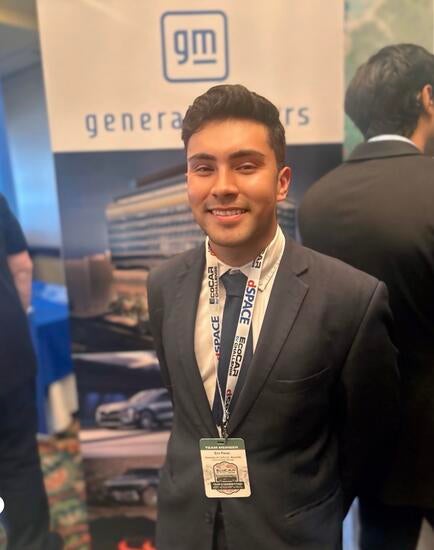
In a recent conversation with EcoCAR UCR Communications Manager Semaria Kebede, Eric reflected on his experience in the program, the lessons he carried forward, and how EcoCAR shaped his path into the automotive industry.
From Student to Systems Integration Engineer
Eric joined EcoCAR as a student and quickly became deeply involved in the program. During his time on the team, he held key leadership roles, including Systems Design and Integration Engineer, and later as a Project Engineer.
That transition marked a turning point in his career.
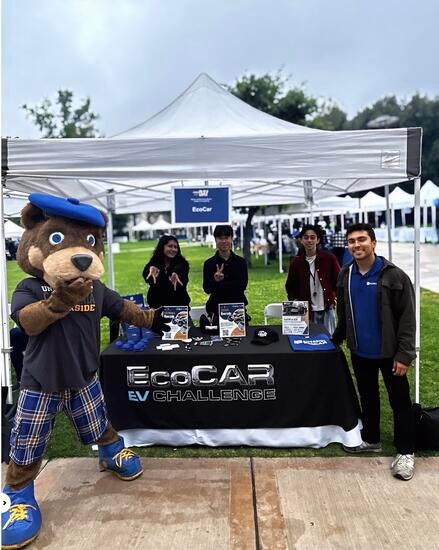
Beyond technical work, Eric discovered a strong interest in leadership, communications, mentoring team members, guiding projects, and helping others grow within a highly collaborative engineering environment.
Today, Eric applies those same skills in his role at General Motors, working as a Systems Integration Engineer, where he focuses on bringing together complex vehicle systems to function seamlessly.
Tackling Complex Vehicle Integration
During Eric’s time on the team, the primary challenge was integrating advanced systems into the 2023 Cadillac LYRIQ platform, provided by General Motors as part of the EcoCAR EV Challenge.
The focus of the competition is to demonstrate the potential of:
- Advanced propulsion systems
- Connected and Automated Vehicle (CAV) technologies
- Energy-efficient vehicle solutions
Rather than building a vehicle from scratch, teams work to modify and enhance an existing production vehicle, requiring deep integration across mechanical, electrical, and software systems.
Bringing these systems together requires constant iteration and problem-solving. As Eric described it, the process often feels like “playing whack-a-mole”, solving one issue reveals another.
Through this challenge, students gain one of the most valuable lessons in engineering:
Integration is everything.
Learning to Think Like an Engineer
Beyond technical knowledge, EcoCAR helped Eric develop a mindset that continues to shape his work today.
One of the most important lessons he emphasized was finding the balance between planning and action.
“You can’t plan for everything. At some point, you have to take action, learn from mistakes, and keep moving forward.”
This mindset—combined with system-level thinking, teamwork, and adaptability became the foundation of his engineering approach.
From Classroom to Career
Today, Eric applies many of the same skills he developed in EcoCAR at General Motors.
From system integration to cross-team collaboration, the real-world experience gained through the competition gave him a strong advantage when entering the workforce.
“EcoCAR gives you something real to talk about—technical work, teamwork, deadlines. That experience sets you apart.”
Unlike traditional coursework, EcoCAR immerses students in a full engineering lifecycle—designing, testing, troubleshooting, and delivering results under real constraints.
Advice for Current Students
Looking back, Eric encourages current EcoCAR students to approach the program with a professional mindset.
- Treat EcoCAR like a real job
- Document your work
- Prioritize integration early and often
- Continuously test and validate
By doing so, students not only contribute to the success of the vehicle but also prepare themselves for the expectations of the industry.
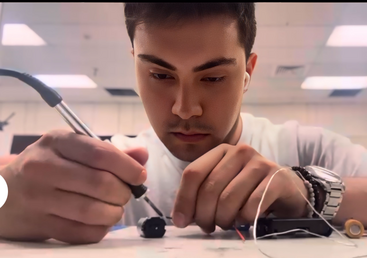
As the automotive industry continues to evolve, Eric sees programs like EcoCAR playing a critical role in preparing students for the future.
With increasing emphasis on software-driven systems, electrification, and safety, the ability to work across disciplines and integrate complex systems will only become more important.
At its core, EcoCAR remains a unique space where students can build, test, and learn in ways that go far beyond the classroom.
Building the Next Generation of Engineers
Eric’s journey, from student engineer to industry professional, highlights the long-term impact of hands-on programs like EcoCAR.
By combining technical development with leadership, collaboration, and real-world experience, EcoCAR UCR continues to shape the next generation of engineers ready to lead in the future of mobility.
Want to follow more stories like Eric’s? Explore more blogs, interviews, and behind-the-scenes content on the EcoCAR UCR website and social platforms.
Let us help you with your search